Introduction
Rome is often described as an open-air archive: an ancient city that never stopped being lived in. What makes it unforgettable is not only the “big” sights, but the way layers of time sit next to each other — an imperial ruin around the corner from a Baroque fountain, a quiet church above a pagan temple, a neighborhood that still feels like someone’s everyday.
A good Rome souvenir magnet is like a thumbnail of that experience. It does not need to be expensive or flashy. It just needs to be specific enough that, when you see it on a fridge door months later, you remember where you were, what you heard, and why that moment stuck.
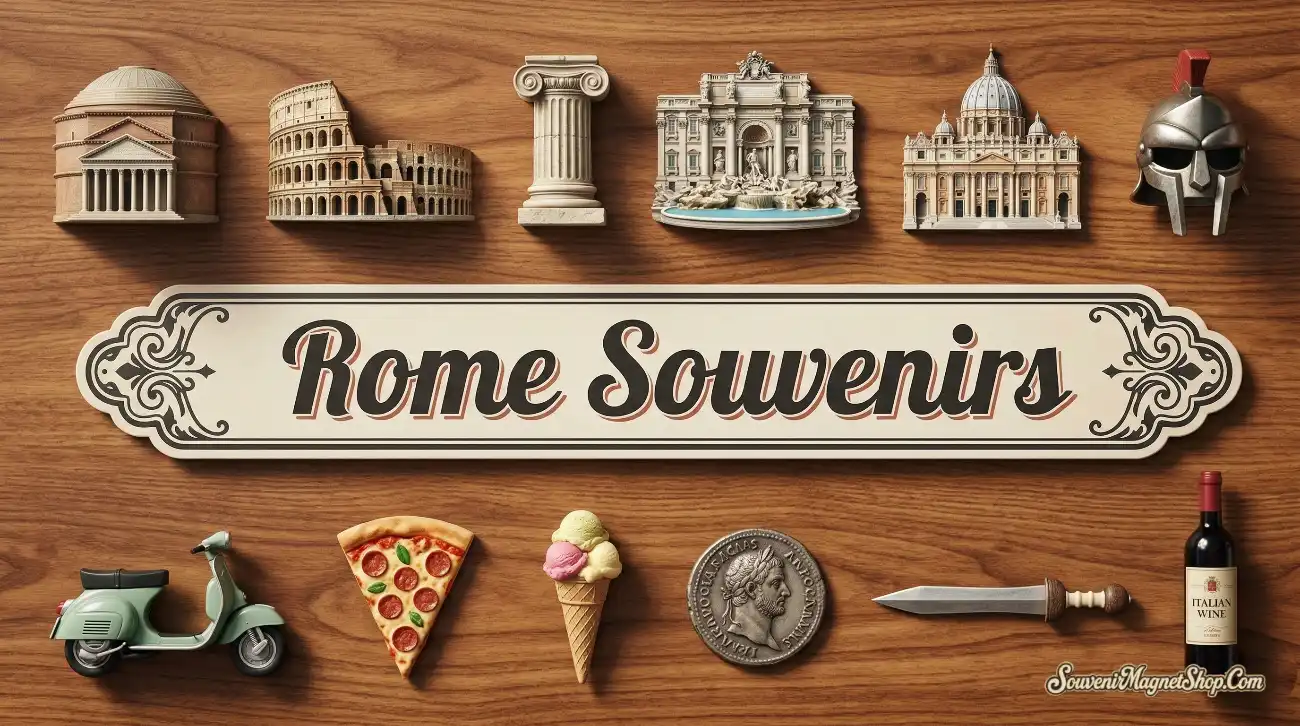
Below are 10 Rome icons that travelers most often associate with the city’s story, along with a few practical notes on what each place represents.
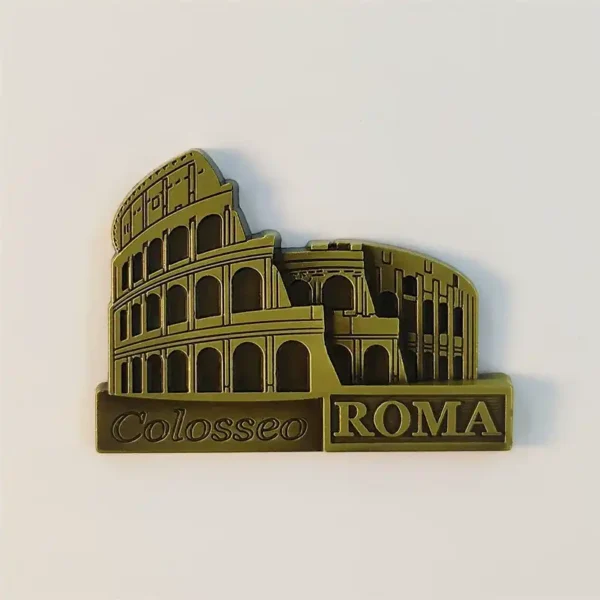
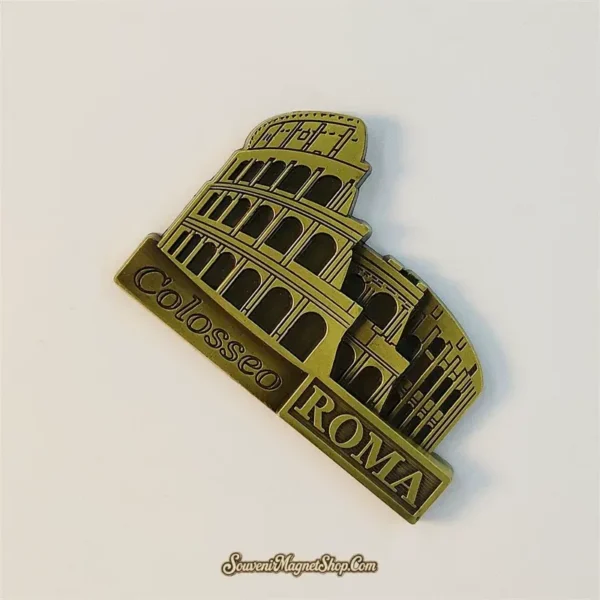
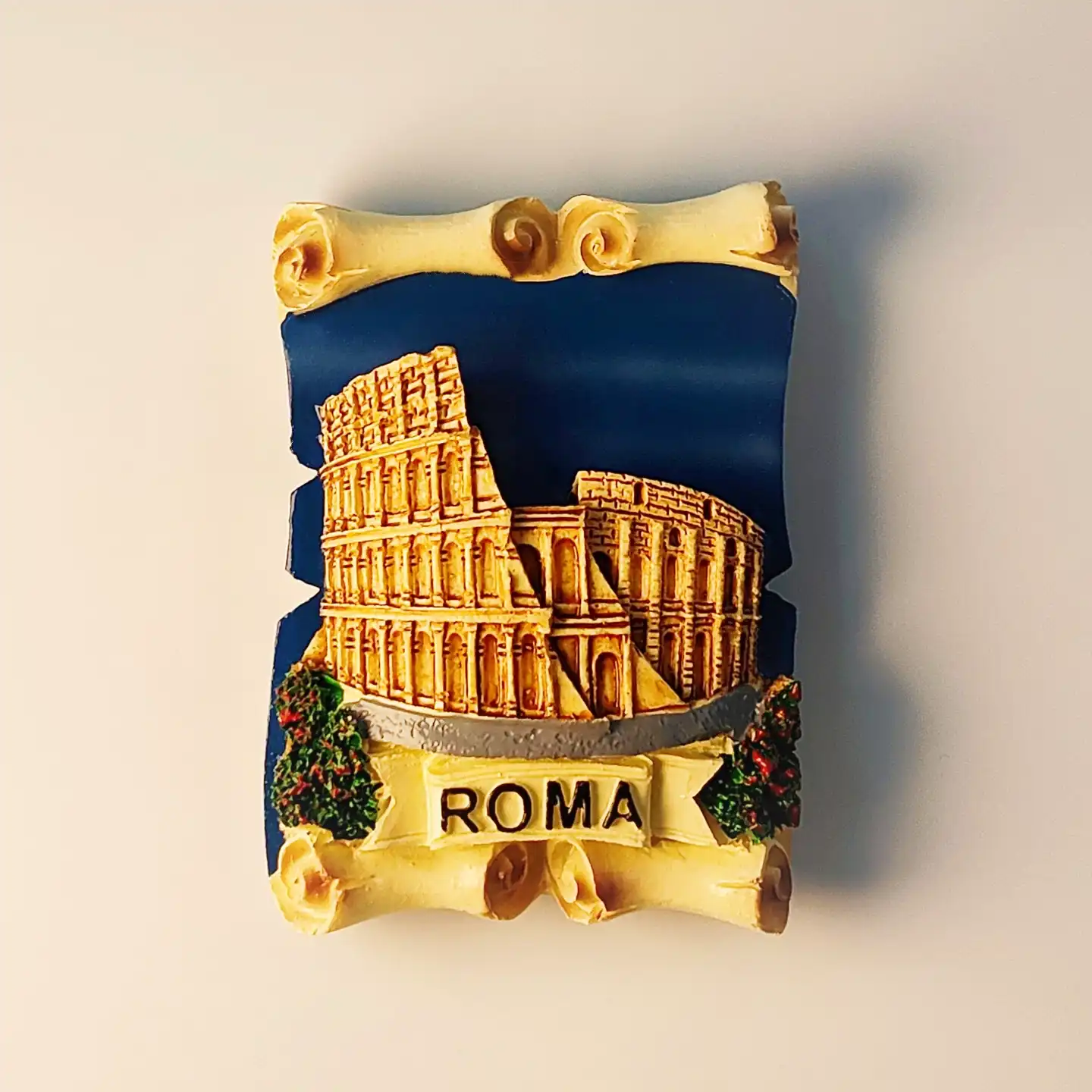
1. The Colosseum (Colosseo)
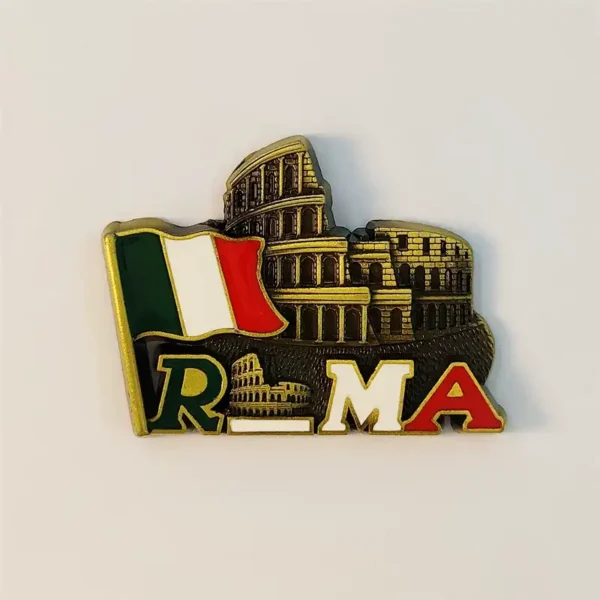
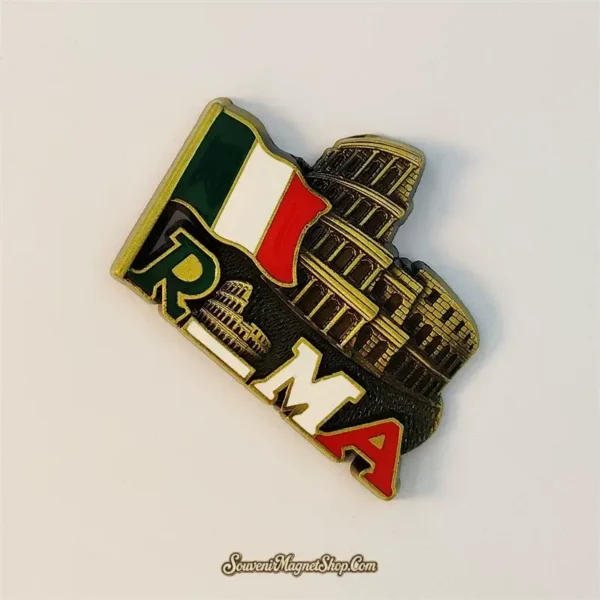
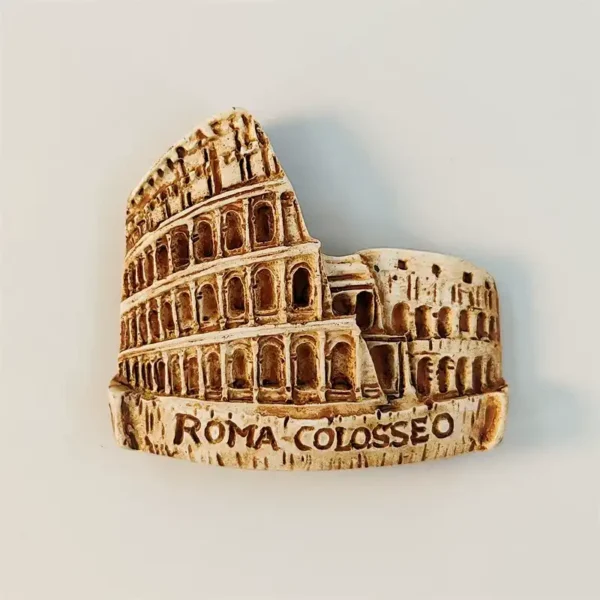
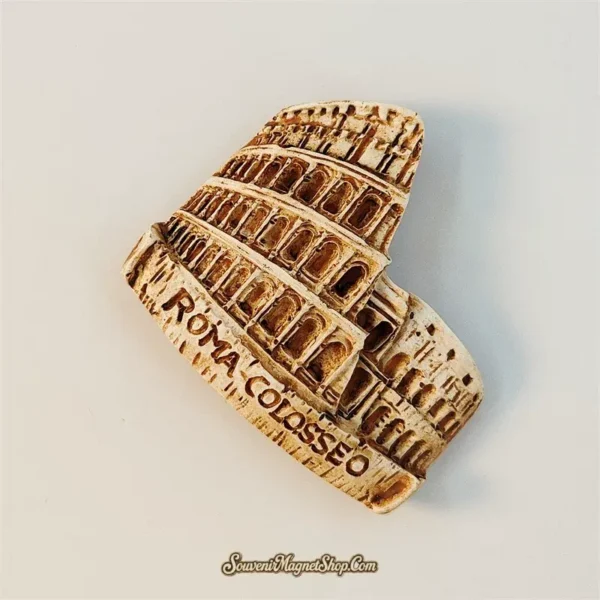
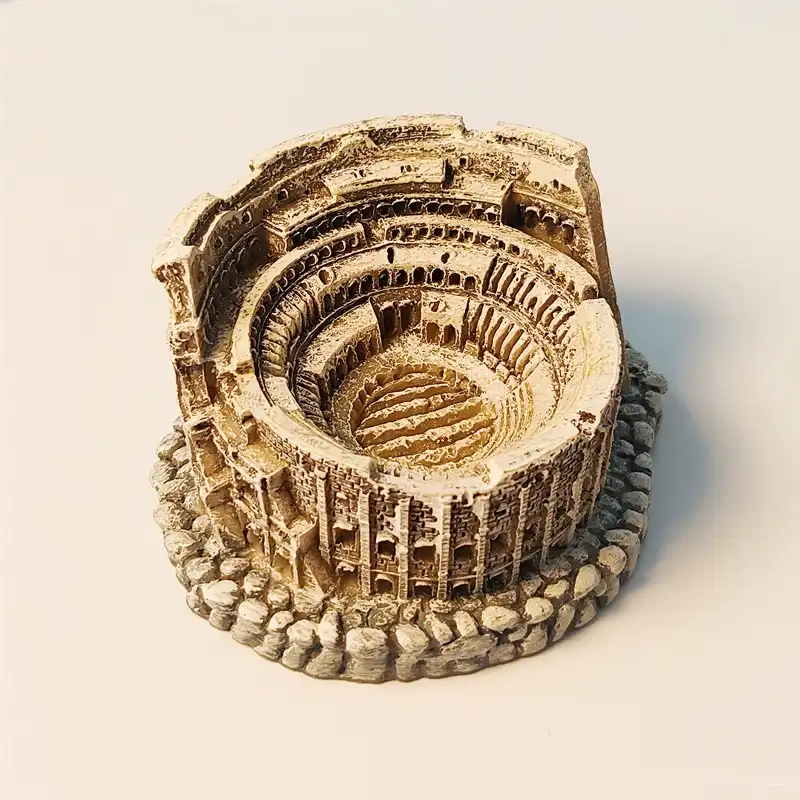
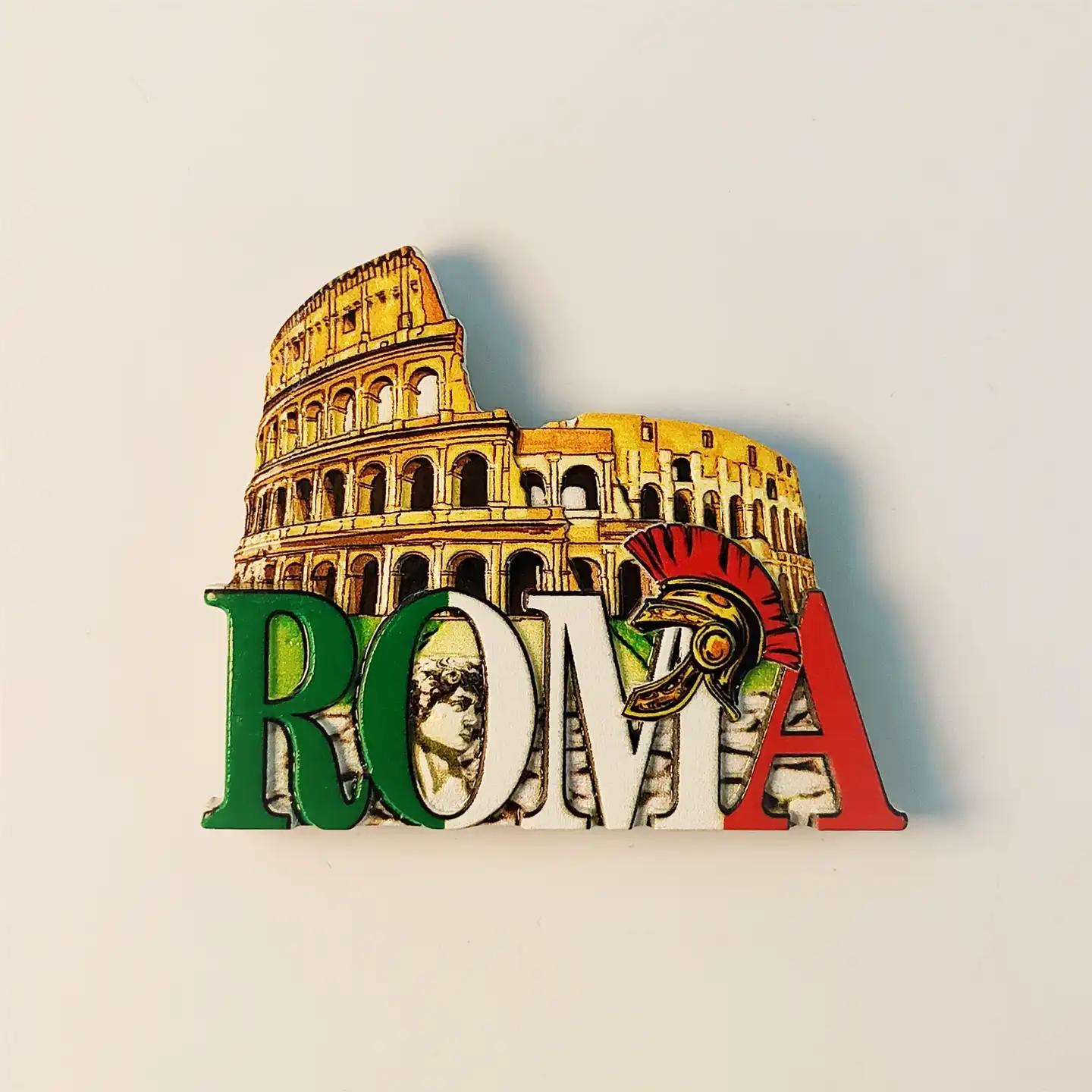
The Colosseum is not just a landmark. It is a symbol of how Rome staged power in public. Built in the 1st century CE, it hosted spectacles that were equal parts entertainment and political messaging. Even when you only see it from the outside, the scale is the point: this was architecture designed to make the empire feel inevitable.
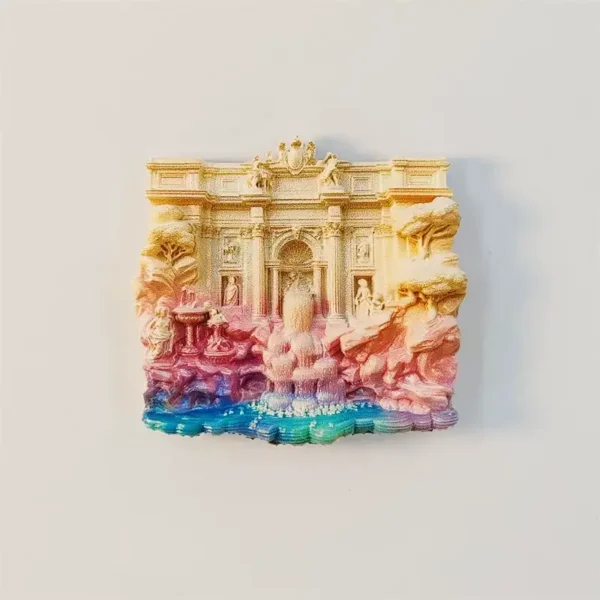
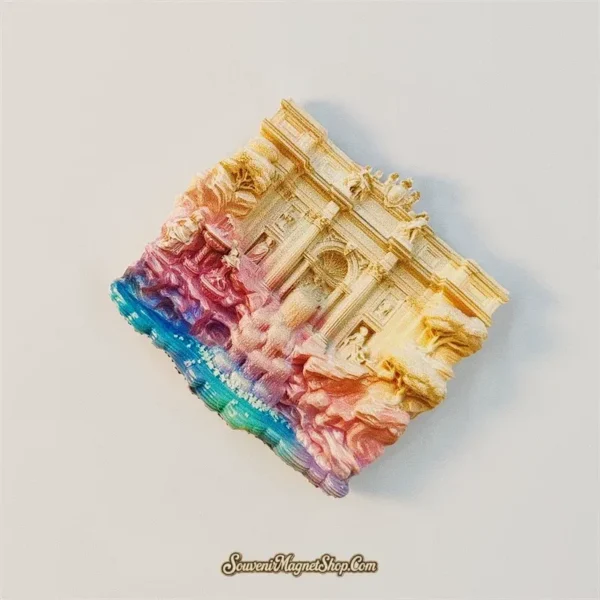
2. Trevi Fountain (Fontana di Trevi)
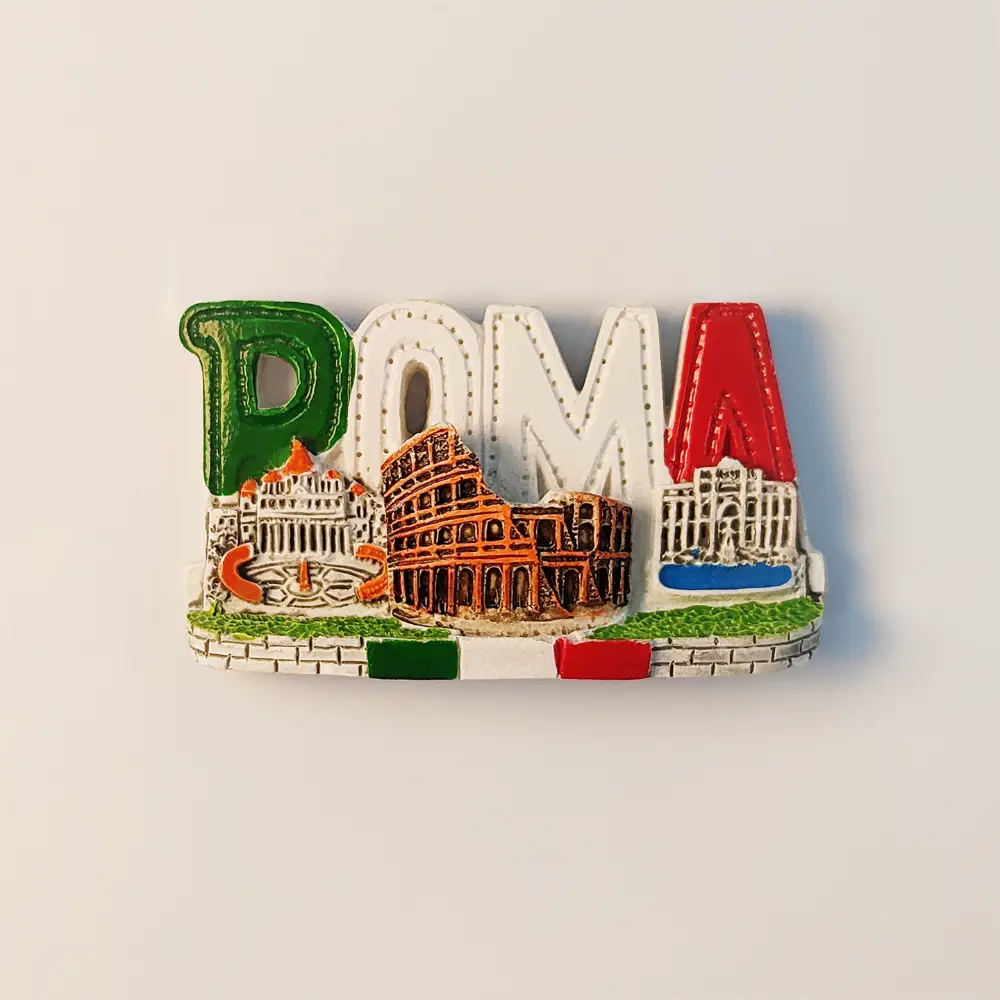
Trevi is Rome’s most famous fountain for a reason: it turns a busy city corner into a theatrical stage. The tradition of tossing a coin is less about superstition and more about a small ritual travelers share — a way to mark “I was here” and “I want to come back.” On a magnet, Trevi works well because it is instantly recognizable: water, stone, motion, drama.
3. The Pantheon
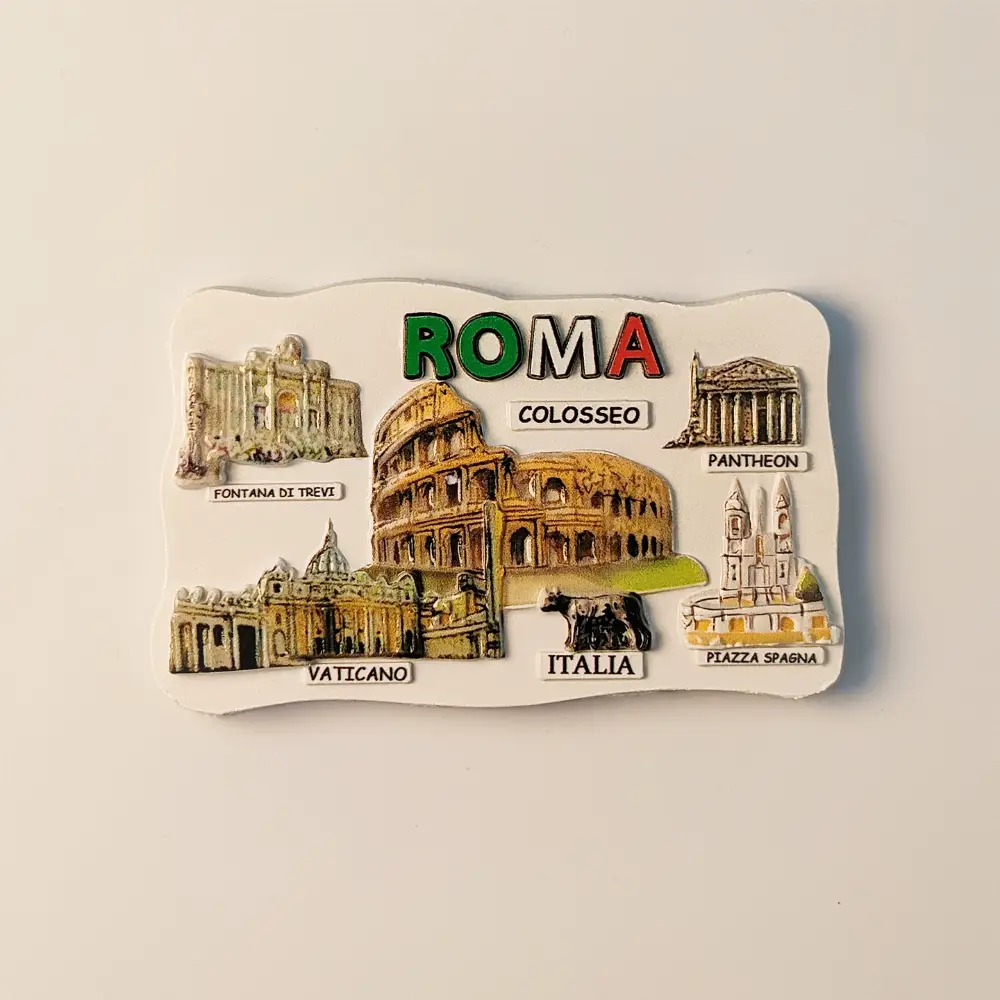
The Pantheon is one of those buildings that quietly resets your expectations of what “old” means. Nearly 2,000 years later, it still feels structurally confident. The dome is the headline, and the oculus is the detail people remember: a single opening that turns sunlight and rain into part of the interior experience. A Pantheon-themed magnet usually reads as “Rome’s engineering genius” in one glance.
4. Vatican City & St. Peter’s Basilica
You do not need to be religious to feel the gravity of Vatican City. It is a concentrated place: art, ritual, crowds, silence, and spectacle, all within a short walk. St. Peter’s Basilica has the emotional impact of scale — the kind of space that makes people lower their voices automatically. In souvenir form, it represents Rome as a center of pilgrimage, power, and global history.
5. Piazza di Spagna & The Spanish Steps
The Spanish Steps are famous, but what makes them memorable is not only the view. It is the feeling of Rome as a lived-in stage set: people pausing, meeting friends, watching the city move. Nearby streets bring in the softer side of the city — fashion, cafés, and the unhurried ritual of strolling.
6. Castel Sant’Angelo
Castel Sant’Angelo is a good reminder that Rome’s buildings rarely had just one life. It began as Emperor Hadrian’s mausoleum and later became a fortress and a papal refuge. A secret passage, the Passetto di Borgo, connects the castle to the Vatican — a detail that makes the site feel like a political thriller carved into stone.[3][4]
7. Piazza Venezia & the Vittoriano (Altare della Patria)
Love it or not, the bright white Vittoriano dominates central Rome. It sits at the intersection of ancient and modern Italy, representing national identity more than imperial grandeur. If the Colosseum speaks for the empire, this monument speaks for the later idea of Italy as a unified country — a different layer of “Rome” that many visitors only understand once they see how it changes the skyline.
8. Trastevere
Trastevere is often described as “authentic,” but the more accurate word is “human.” It is the neighborhood rhythm: narrow streets, warm lights after sunset, local chatter, and small churches that people wander into almost accidentally. If your Rome memories are mostly about evenings rather than museum lines, Trastevere is usually the reason.
9. The Roman Forum
The Roman Forum is the place where the idea of Rome as a political system becomes physical. Walking through it can feel confusing at first — ruins are not labeled the way modern buildings are — but that is part of the experience. You are not visiting a single monument. You are moving through what used to be the city’s center of public life: speeches, processions, courts, arguments, administration.
10. Mouth of Truth (Bocca della Verità)
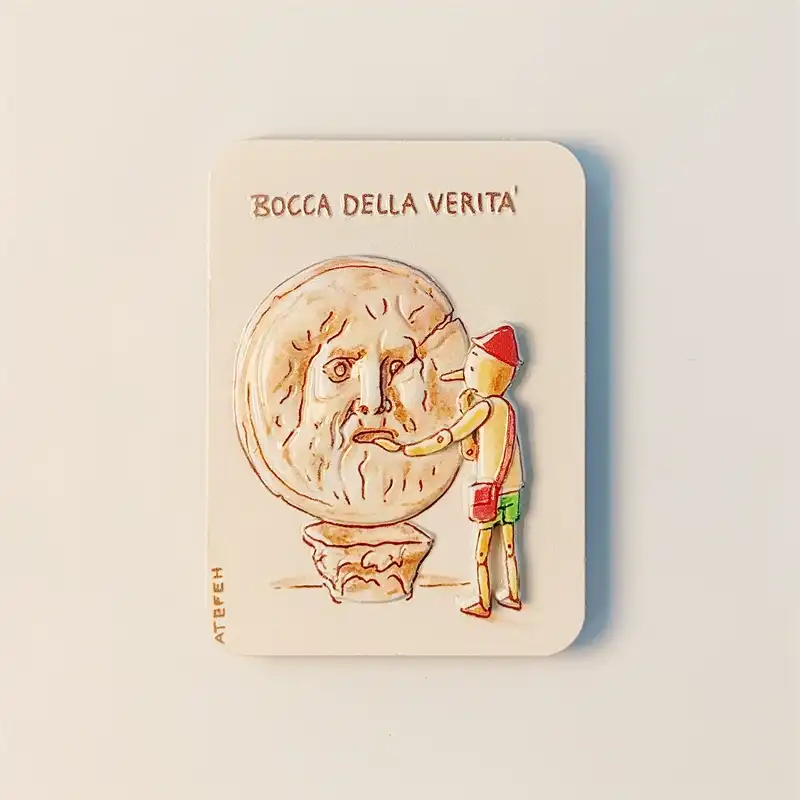
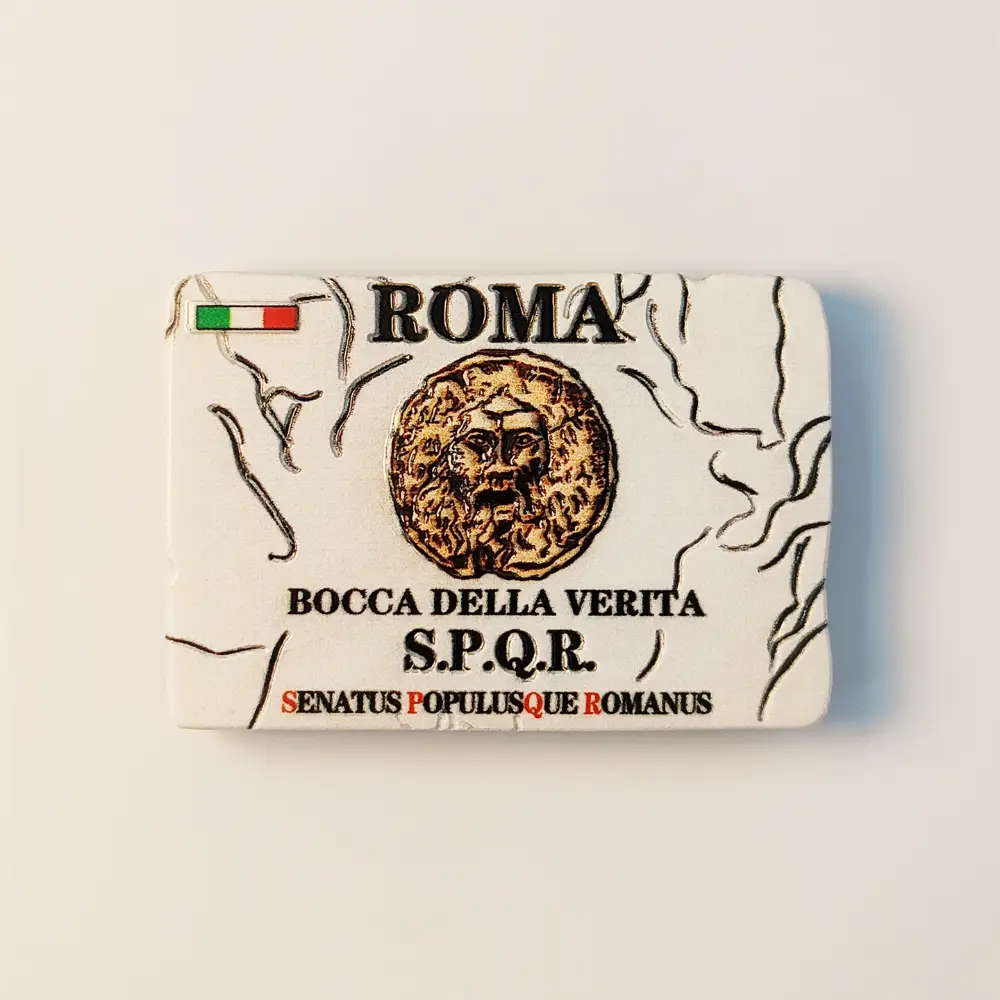
The Mouth of Truth is a small stop compared to the huge landmarks above, but it has one of the most persistent stories. The legend says the mask will bite the hand of a liar — a playful test that turns a piece of carved stone into a shared joke between strangers. It became even more famous after appearing in Roman Holiday, which helped fix it in pop culture as a symbol of Rome’s charm and mischief.
Closing thought
If you line up these 10 places as magnets, you are not really collecting objects. You are collecting Rome’s contrasts: imperial power and everyday streets, sacred spaces and tourist rituals, stone ruins and living neighborhoods. That is why this particular city translates so well into small souvenirs — Rome’s identity is already built from fragments.
Why These Magnets Matter
Collecting Rome souvenir fridge magnets is more than a hobby — it’s a celebration of art, history, and travel memories.
Each landmark tells a timeless story, and together they form a visual diary of your journey through the Eternal City.
Bring Rome Home
Explore our Rome Souvenir Fridge Magnets — hand-painted, detailed, and only $4.99 each, with free worldwide shipping on orders over $49.9.
Start collecting your world — one magnet at a time.
More recommendations
If you’ve enjoyed this article, we believe you’ll also be fascinated by our collection of Italian souvenir fridge magnets.
Explore our Italy Collection, featuring iconic landmarks and cultural treasures from Rome, Milan, Venice, Florence, Pisa, and more — each magnet capturing the timeless beauty and history of Italy in miniature form.