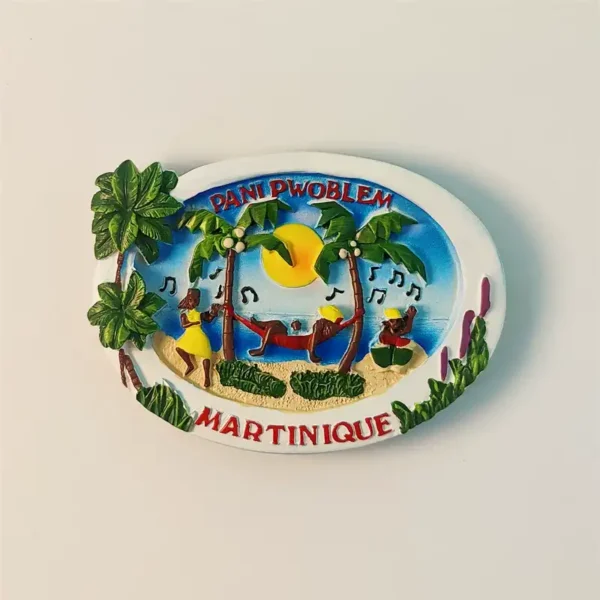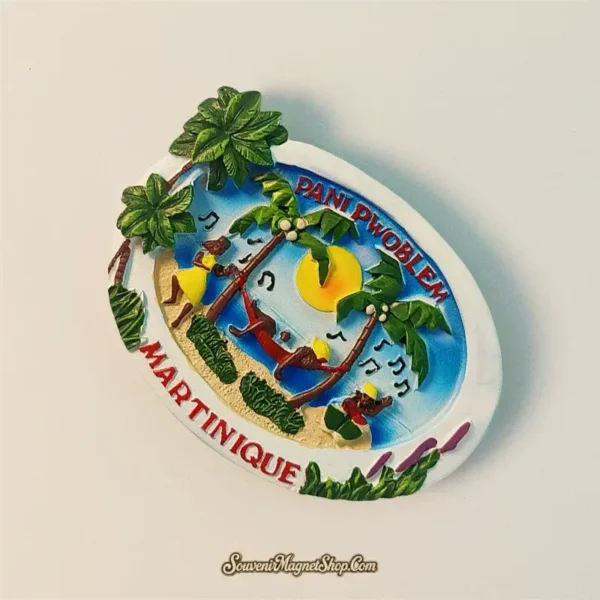
Beyond the golden sands of Martinique (North America) lies a world of rhythm. The island’s folk dances, like the soulful Bèlè and the joyful Biguine, are a beautiful blend of African spirit and European elegance.
If you are a collector of souvenir magnets or looking to expand your collection of America magnets, explore the traditional movements that capture the “Pani Pwoblem” lifestyle and the true essence of the French West Indies.
1. Introduction: Dances in a Cultural Melting Pot
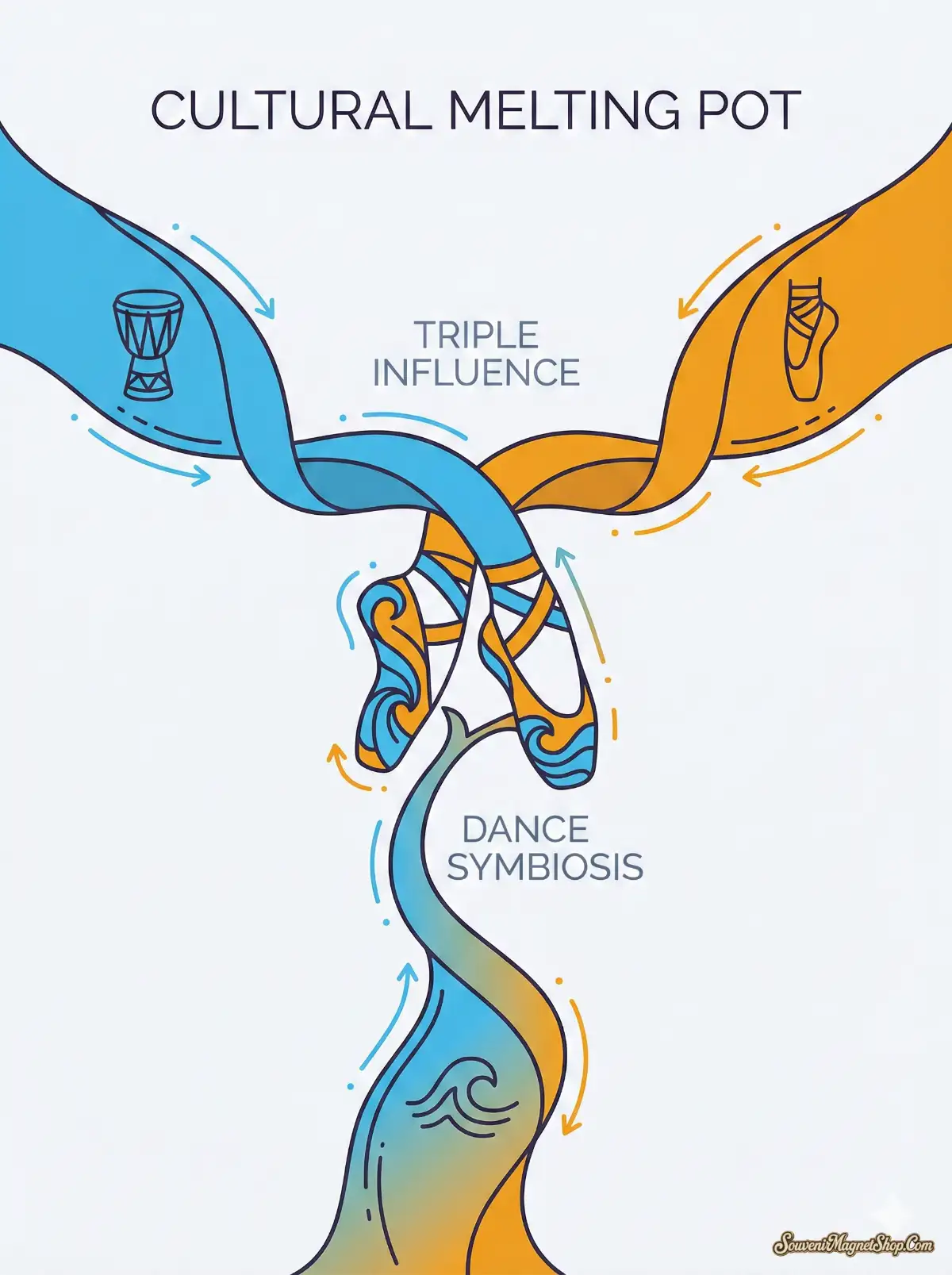
The culture of Martinique is a vivid manifestation of its complex history, blending diverse influences from African, European, and indigenous Caribbean traditions. This unique cultural fusion is brilliantly expressed through the island’s traditional folk dances. These dances are not merely forms of entertainment; they are storytellers of history, unifiers of communities, and symbols of national identity. For tourists, exploring these dances is the best way to deeply understand the soul of Martinique.
2. Analysis of Core Traditional Dances
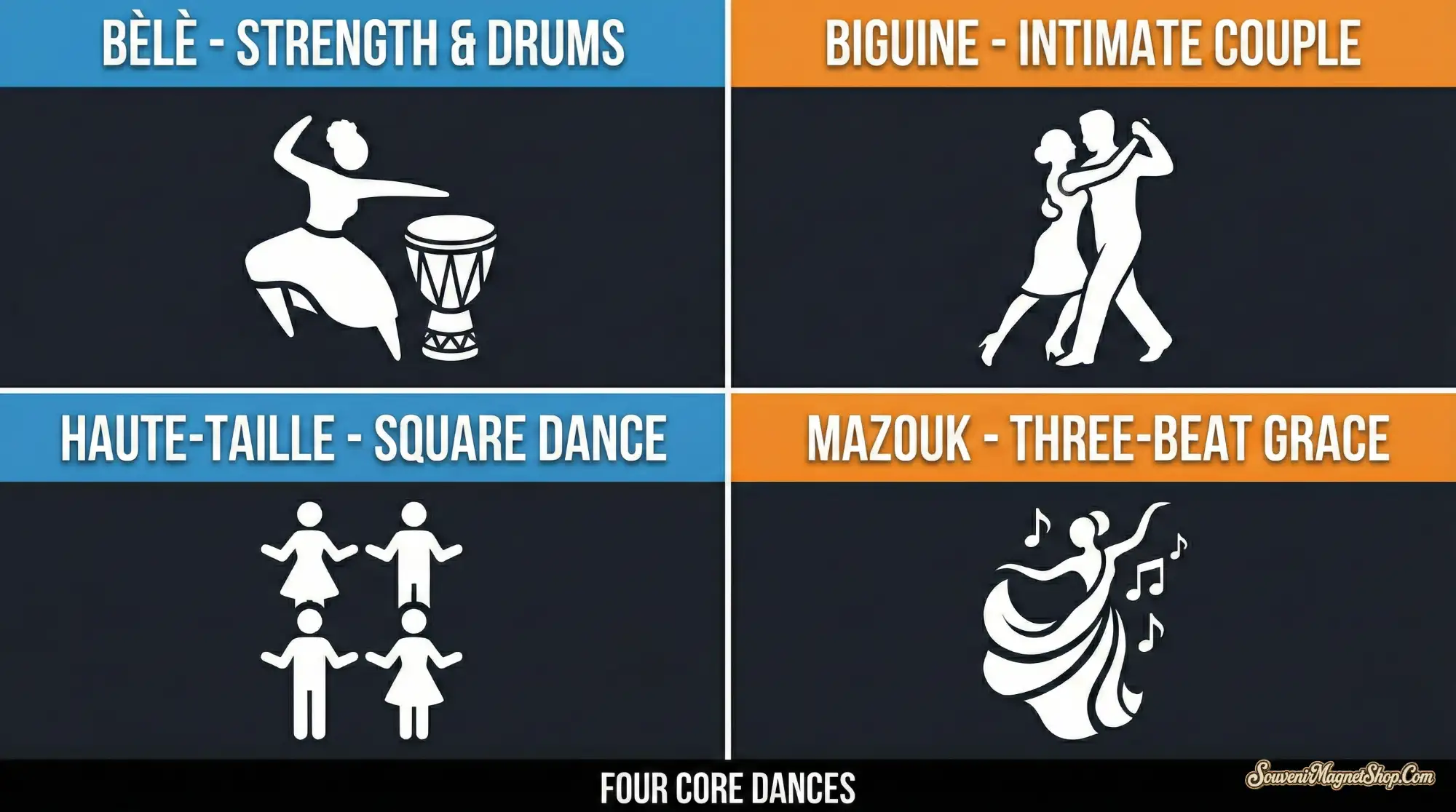
2.1 Bèlè: The Soul Dance from Africa
Bèlè (or Bel-Air) is more than just a dance; it’s a “way of life” deeply rooted in African traditions. Originating during the era of slavery, it was a means for plantation slaves to express emotions, resist oppression, and synchronize collective labor.
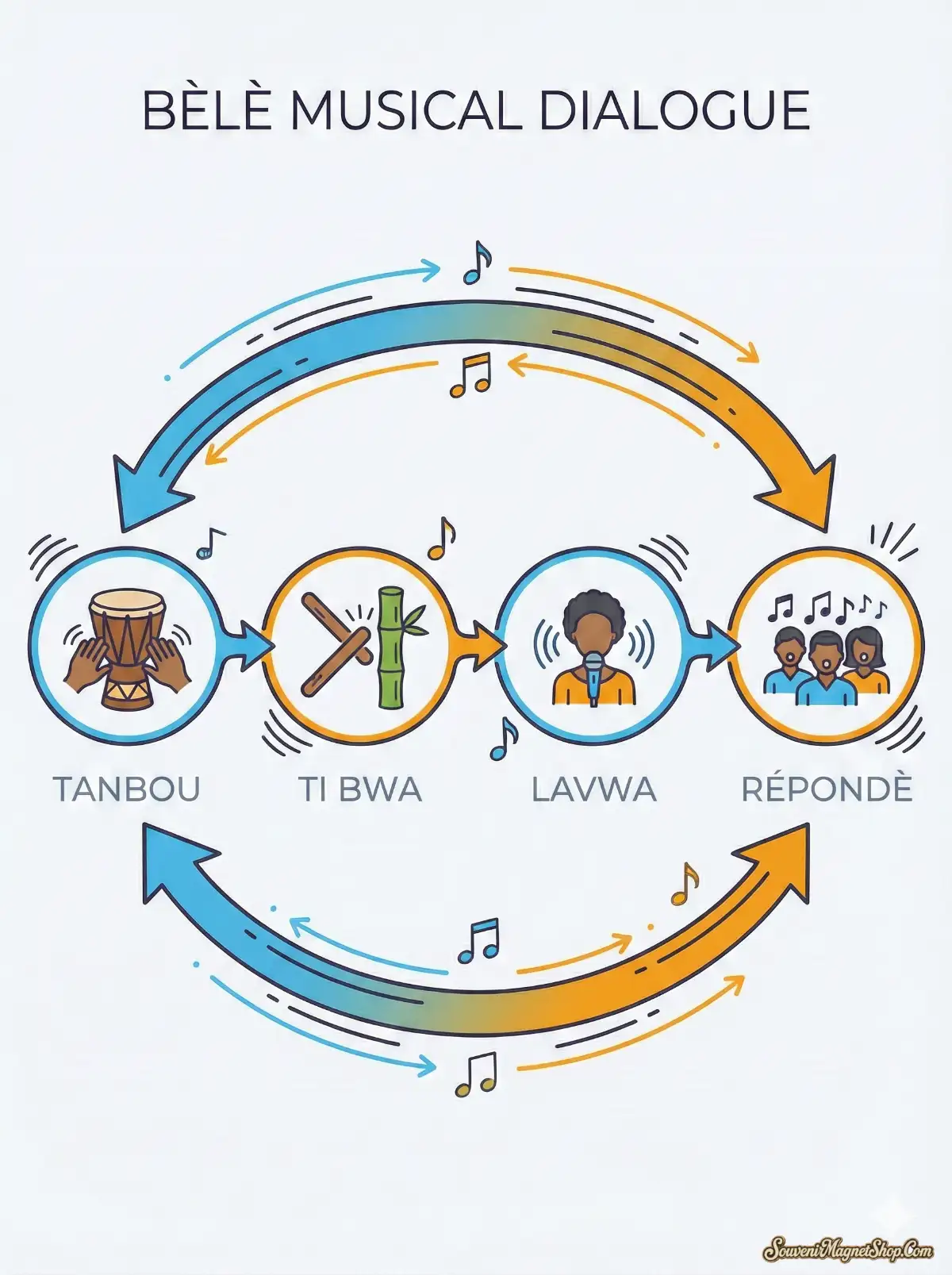
- Performance Style: Bèlè is centered around drumming, typically performed by a drummer (Tanbouyé), a rhythm player who beats on the side of the drum with sticks (Ti bwa player), a lead singer (Lavwa), and a responding chorus (Répondè). Dancers engage in a dynamic dialogue with the drummer, with steps full of power and grace.
- Musical Composition: The core instruments are the tanbou drum made of goatskin and the tibwa (two wooden sticks) providing the basic rhythm. The music employs the traditional African call-and-response vocal form.
- Cultural Significance: Bèlè is a direct embodiment of Martinique’s African heritage, closely linked to resistance and identity. Emancipation Day (May 22nd) is the best time to experience an authentic swaré bèlè.
2.2 Biguine: The Fusion of Colonial Salons and African Rhythms
Biguine is one of Martinique’s most iconic dances, born in 19th-century Saint-Pierre from the collision of European social dances (like the polka) and African bèlè rhythms.
- Performance Style: This is a vibrant couple’s dance, known for its swaying hip movements and intimate partner interaction.
- Musical Composition: Biguine music is characterized by its brisk rhythm, divided into the traditional Bidgin Bèlè (drums/tibwa) and Orchestrated Biguine (clarinet, violin, banjo).
2.3 Haute-Taille (Quadrille): The Creole-ized European Court Dance
Haute-Taille is Martinique’s Creole adaptation of the European court Quadrille. It evolved into a uniquely Caribbean style where four couples arranged in a square perform under the command of a “Commander.” It features more expressive movements and a stronger body rhythm than its original European version.
2.4 Mazouk (Mazurka): The Passionate Creole Mazurka
Mazouk is the island’s version of the Polish Mazurka. This elegant couple’s dance is divided into two parts: the rhythmic and energetic piqué, and the slower, more gliding nuit.
3. Costume Culture in Dance
Martinique’s traditional dance costumes are vibrant in color and rich in symbolism:
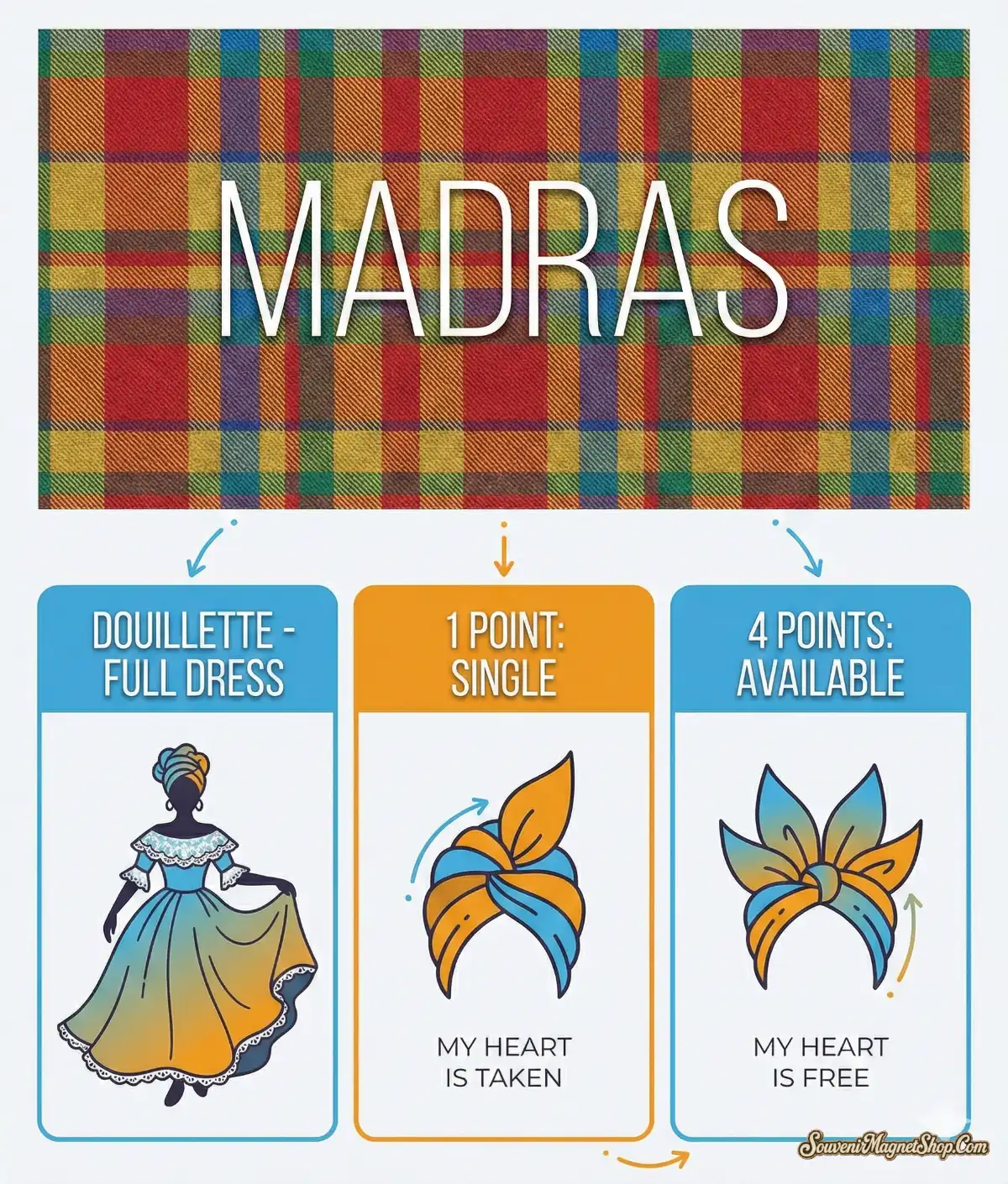
- Madras (Madras Fabric): The most representative textile of Martinique, used for dresses, skirts, and headwraps.
- The Language of Headwraps: The way a Madras headwrap is tied is a silent language; the number of knots can convey the wearer’s marital status and emotional availability.
4. Tourist Experience Guide: Where to Appreciate Traditional Dances
- Cultural Performance Groups: Look for the renowned “Les Grands Ballets de Martinique.”
- Festive Events: Carnival is the ultimate time to experience the island immersed in an ocean of music and dance.
- Cultural Centers: Visit the Maison du Bèlè for the most authentic drumming and dance workshops.
5. Conclusion: A Living Cultural Heritage in Transmission
Martinique’s folk dances are not merely historical relics but vibrant, living heritage. For travelers, participating in a Bèlè night is an unforgettable journey to engage with the warm and resilient soul of this Caribbean island.
To keep this vibrant heritage close at hand, we’ve created the France Martinique Caribbean Beach “Pani Pwoblem” Fridge Magnet, allowing you to take a piece of Martinique’s (North America) soul home with you.