Beyond Thailand’s 3 National Treasure Temples: Hidden Gems & Tuk-Tuk Adventures in Bangkok
1. Introduction
Ask anyone about Bangkok temples and you will hear the same three names: Wat Phra Kaew, Wat Pho, and Wat Traimit — Thailand’s famous “Three National Treasures.” These are the temples that appear in every guidebook, every tour package, and every first-timer’s itinerary. And they deserve it.
But here is what most guides do not tell you: some of Bangkok’s most unforgettable temple experiences are not in that famous trio. Sitting just across the river, or hiding on a quiet hilltop minutes from the tourist crowds, are temples that rival the National Treasures in beauty — and surpass them in atmosphere.
This guide starts with the Big Three, then takes you beyond them to two stunning temples most tourists overlook, plus the most iconic way to travel between them: Bangkok’s legendary tuk-tuk.
2. Thailand’s 3 National Treasure Temples
Thailand’s “Three National Treasures” are the country’s most sacred and visited Buddhist temples, all located in the heart of Bangkok:
2.1 Wat Phra Kaew — Temple of the Emerald Buddha
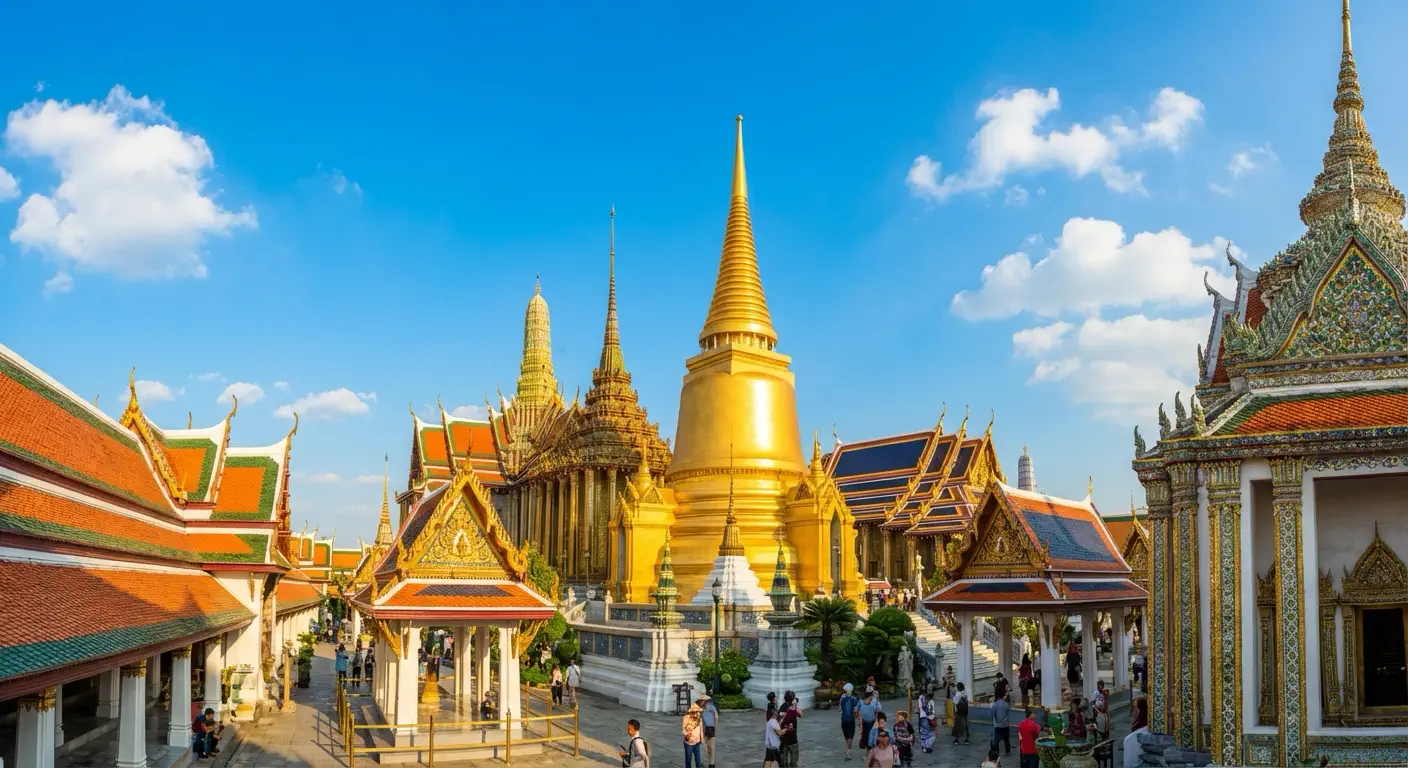
The crown jewel. Built in 1782 inside the Grand Palace complex, Wat Phra Kaew is the most sacred Buddhist temple in all of Thailand. It houses the Emerald Buddha — a 66-centimeter jade statue that sits atop a towering golden altar. Despite its modest size, this is the single most revered Buddha image in the country. The King himself changes the statue’s golden robes three times a year, marking each new season.
The temple grounds are overwhelming in the best way. Layer upon layer of steep gabled roofs gleam with orange, gold, and deep blue tiles. Towering golden prangs and chedis pierce the sky. Every surface — walls, columns, door frames — is covered in mosaics, gilded carvings, and yaksha (demon guardian) statues.
Look for:
- The 12 Demon Guardians standing at the six gates
- A detailed scale model of Angkor Wat, built during King Rama IV’s reign
- The murals of the Ramakien wrapping the inner gallery — 178 panels telling a single epic story
Admission: 500 THB (includes Grand Palace) · Hours: 8:30 AM – 3:30 PM · Dress code: Strict — shoulders and knees covered
2.2 Wat Pho — Temple of the Reclining Buddha
The giant. Home to a 46-meter-long gold-plated Reclining Buddha, Wat Pho is one of the largest and oldest temple complexes in Bangkok. But it is more than a single statue — the grounds contain over 1,000 Buddha images, making it one of the most extensive collections of Buddhist sculptures in Thailand.
Wat Pho is also the birthplace of traditional Thai massage. King Rama III turned the temple into Thailand’s first public university, inscribing medical knowledge onto stone tablets that still line the walls today. The massage school on-site continues to teach the ancient techniques.
Admission: 300 THB · Hours: 8:00 AM – 6:30 PM · Don’t miss: The coin meditation behind the Reclining Buddha — 108 bowls, one wish per coin
2.3 Wat Traimit — Temple of the Golden Buddha
The golden surprise. Wat Traimit houses the world’s largest solid gold Buddha statue — a 5.5-ton, 3-meter-tall seated Buddha made of pure 18-karat gold. The extraordinary story: for centuries, the statue was covered in plaster and thought to be ordinary. In 1955, while being moved, the plaster cracked and revealed the gleaming gold beneath — a secret hidden for over 200 years, likely to protect it from Burmese invaders.
Located near Bangkok’s Chinatown, the temple was reportedly built by three Chinese merchants, earning it the nickname “Three Friends Temple” .
Admission: 100 THB · Hours: 8:00 AM – 5:00 PM · Location: Near Hua Lamphong station, edge of Chinatown
3. Beyond the Big Three: 2 Temples Most Tourists Miss
The National Treasures are essential — but they are also the most crowded, most expensive, and most rushed temple experiences in Bangkok. The two temples below offer something the Big Three often cannot: space to breathe, time to look, and moments that feel personal rather than performative.
3.1 Wat Arun — The Temple of the Dawn
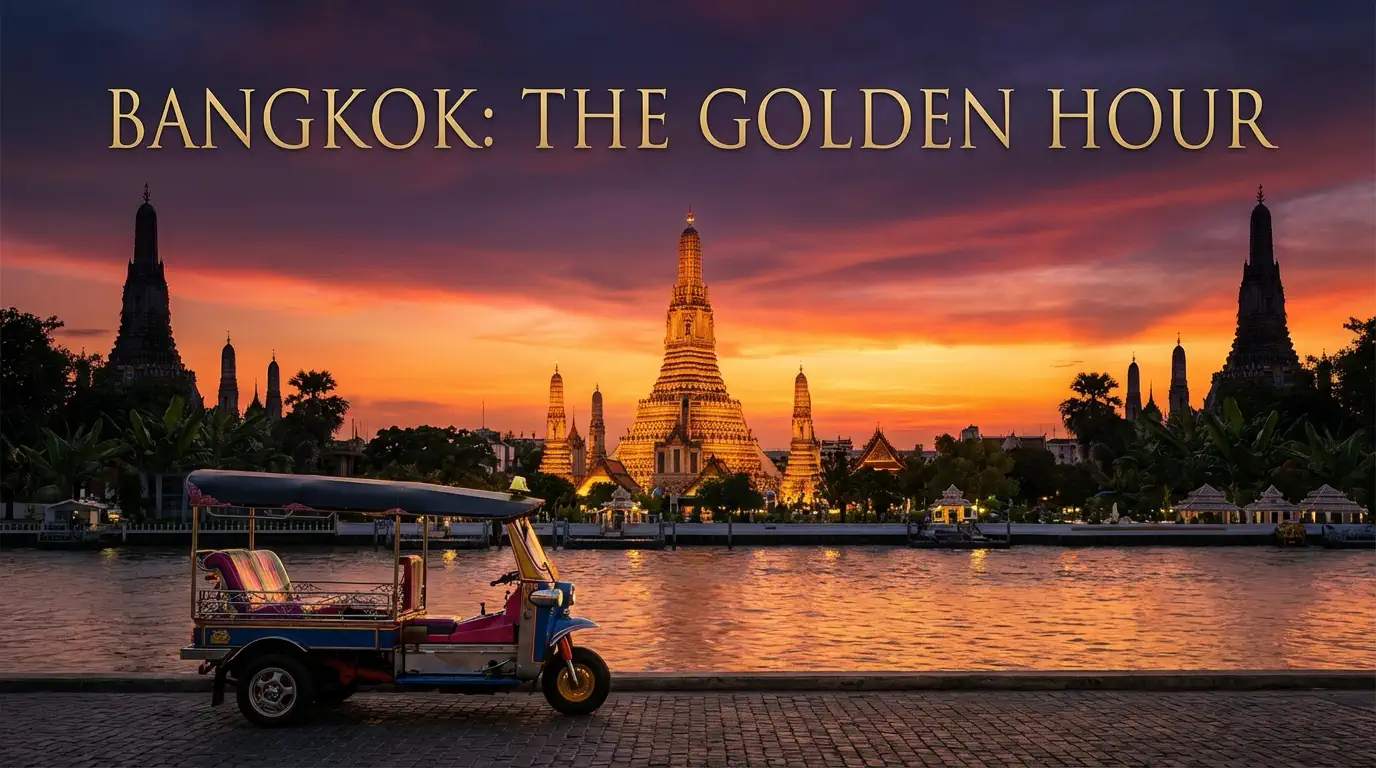
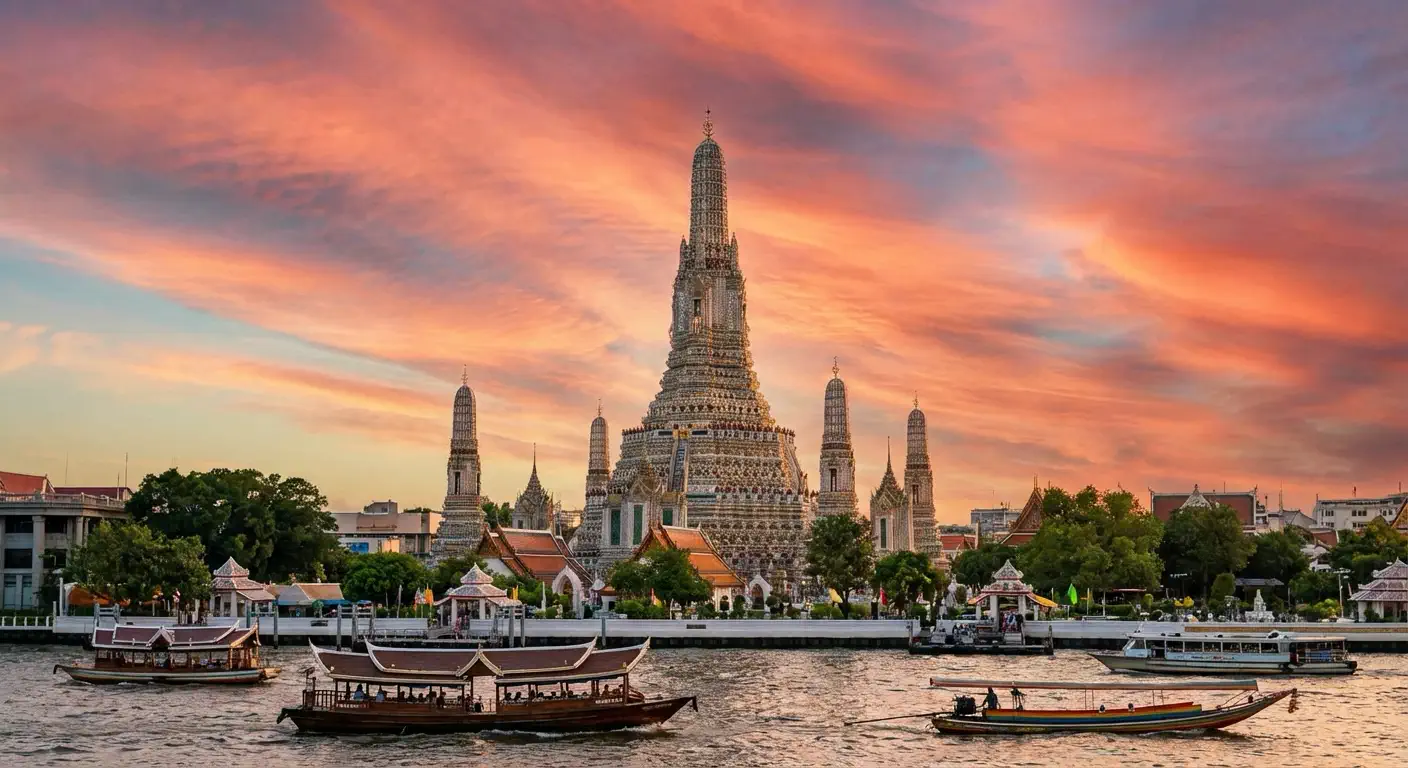
Sitting on the west bank of the Chao Phraya River, Wat Arun is one of the most photographed silhouettes in Southeast Asia — yet most tourists only see it from across the water. Crossing the river to actually visit Wat Arun is one of the best decisions you can make in Bangkok.
The temple is named after Aruna, the Hindu god of dawn. The name dates back to the Thonburi period, when General Taksin arrived at the temple at sunrise after defeating the Burmese. He later became king and briefly housed the Emerald Buddha here before it was moved across the river to Wat Phra Kaew.
What makes it special: The central prang (Khmer-style tower) stands over 80 meters tall and is covered in thousands of pieces of Chinese porcelain and colored glass, embedded into wet plaster by hand. When sunlight hits these fragments at different angles, the entire tower seems to change color throughout the day.
You can climb partway up the central prang for a panoramic view of the river and the Grand Palace skyline. The surrounding courtyard contains four satellite prangs and ordination halls with detailed mural paintings.
Why it is overlooked: Wat Arun requires crossing the river by ferry, which adds a step that many tour groups skip. But that 4-THB ferry ride from Tha Tien pier is itself one of Bangkok’s great micro-experiences — a two-minute crossing that separates you from the tourist masses on the east bank.
Admission: 200 THB · Hours: 8:00 AM – 6:00 PM · Best time: Late afternoon for golden light on the porcelain; sunset from the opposite bank
3.2 Wat Saket — The Golden Mount
If Wat Phra Kaew is Bangkok’s spiritual crown and Wat Arun is its riverside jewel, then Wat Saket is its quiet heart. While the National Treasures draw millions, the Golden Mount attracts a smaller, more contemplative crowd — and rewards them with what may be the single best view in historic Bangkok.
The temple dates back to the Ayutthaya period, but the iconic golden hilltop was added in the 19th century under Kings Rama III and IV. The artificial mound was built using earth from canal excavations — quite literally, the city’s own soil lifting a sacred space toward the sky.
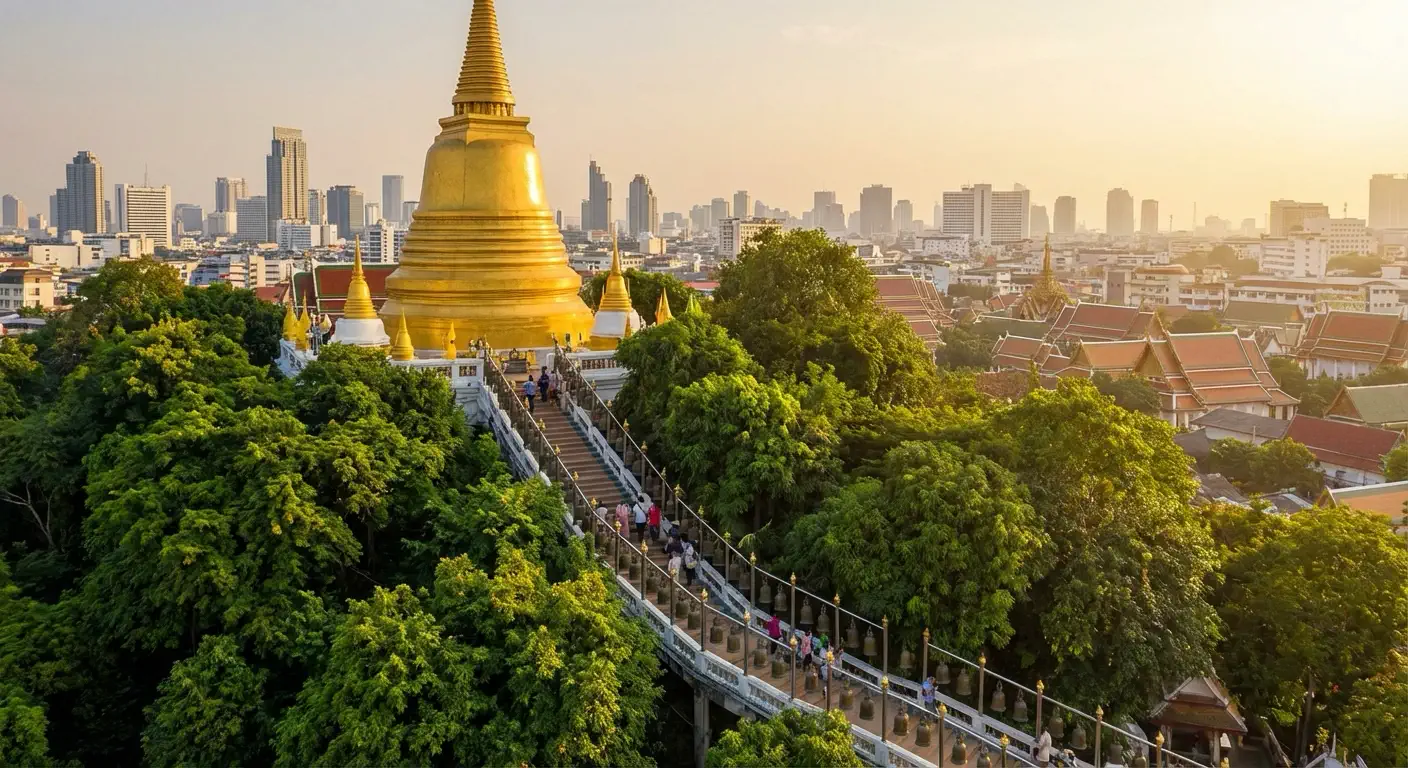
The experience: You climb 344 steps up a winding stairway that spirals around a lush, tree-covered hill. Temple bells hang along the path. Monks chant somewhere out of sight. The pace naturally slows — there is no rushing this climb.
At the summit, a gleaming golden chedi houses a relic of the Buddha. But the real reward is the 360-degree panoramic view — the Chao Phraya River, the glittering rooftops of the Grand Palace, the sprawl of the modern city beyond. It is one of the few places in old Bangkok where you can see the entire skyline at once.
Why it is overlooked: No tour bus can drive up to the entrance. There is no air conditioning. You have to earn it with 344 steps. And that is exactly what makes it special.
Admission: 100 THB · Hours: 7:30 AM – 7:00 PM · Best time: Late afternoon for golden-hour light and cooler temperatures
4. The Bangkok Tuk-Tuk: How to Travel Between Temples Like a Local
You could take the BTS, hail a taxi, or walk. But if you want the real Bangkok temple experience, there is only one way to travel between these sacred sites: by tuk-tuk.
The tuk-tuk is Bangkok’s most iconic vehicle — a buzzing, open-air three-wheeled taxi that has been weaving through the city’s streets for decades. With bold paint jobs in bright yellows, reds, greens, and blues, chrome accents, and colorful racing stripes, every tuk-tuk has its own personality. The distinctive rounded canopy and compact three-wheeled frame have become instantly recognizable worldwide as a visual shorthand for Thailand itself.
4.1 Why Tuk-Tuks and Temples Go Together
The historic temple district of Bangkok — Rattanakosin Island — is a maze of narrow lanes, one-way streets, and ancient walls that modern taxis struggle to navigate. Tuk-tuks, however, were made for this terrain. They are small enough to weave through tight sois (alleyways), nimble enough to dodge traffic at temple intersections, and open-sided so you can watch the golden spires slide past as you ride.
A tuk-tuk ride between the Grand Palace and Wat Saket takes about 10 minutes and costs 60–100 THB — and the journey itself becomes part of the temple experience. You will pass through streets where monks collect morning alms, vendors sell jasmine garlands, and the smell of pad thai drifts from every other corner.
4.2 Tips for Tuk-Tuk Rides in Bangkok
- Always negotiate the fare before getting in — tuk-tuks do not use meters
- Typical temple-area rides: 60–150 THB depending on distance
- Avoid drivers who offer “free” tours — these usually include stops at gem shops or tailor shops where they earn commissions
- Best for short hops between nearby temples (Grand Palace → Wat Saket, Wat Pho → ferry pier)
- Hold on — the ride is half the fun, but Bangkok traffic is no joke
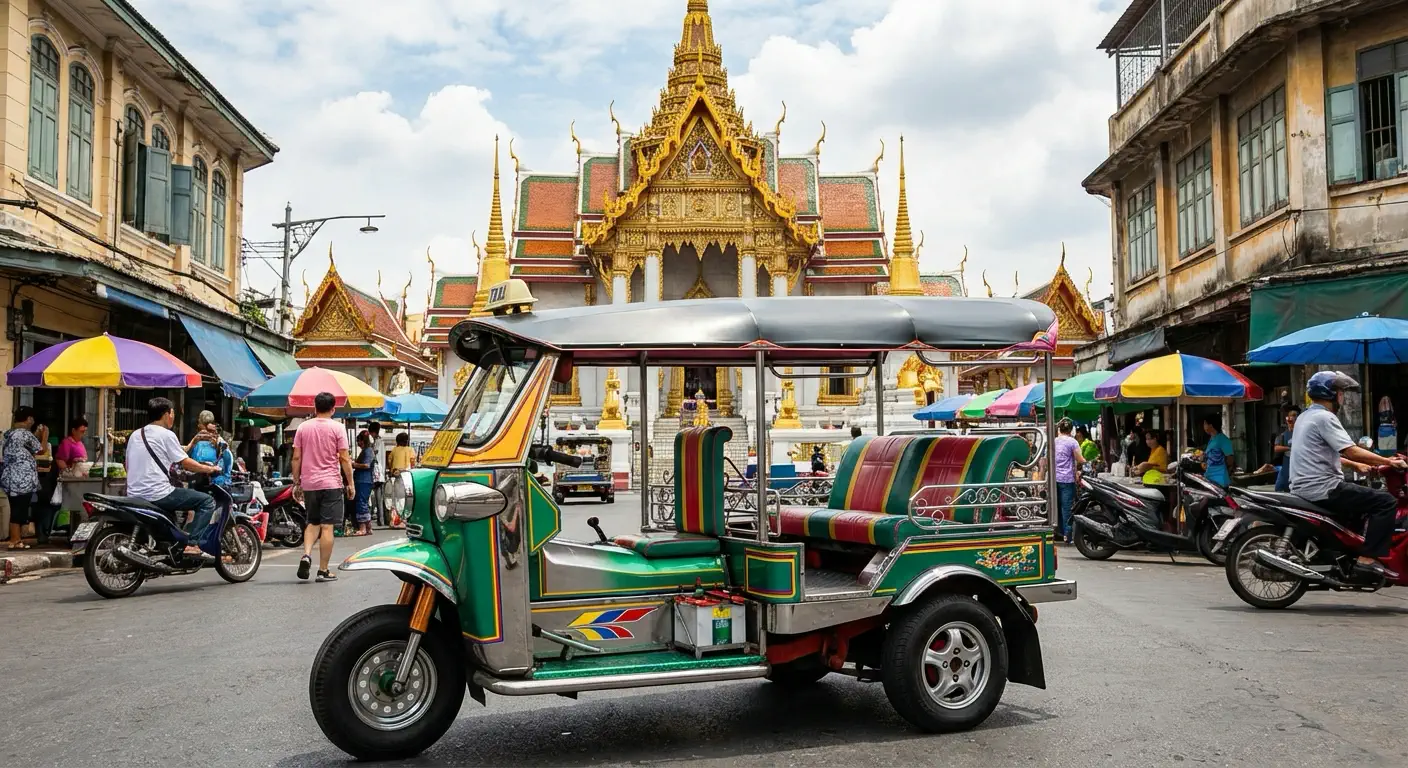
The tuk-tuk is so central to the Bangkok experience that it has become a collectible souvenir in its own right — from model cars to fridge magnets featuring the classic three-wheeler against a golden temple backdrop.
5. Planning Your Bangkok Temple & Tuk-Tuk Day
Here is how to combine the National Treasures, hidden gems, and tuk-tuk rides into one unforgettable day:
Morning (8:30 – 11:00 AM)
- Start at Wat Phra Kaew & the Grand Palace — arrive at opening to beat the heat and crowds
- Walk south to Wat Pho — see the Reclining Buddha and try the coin meditation
Midday (11:30 AM – 1:30 PM)
- Take the 4-THB river ferry from Tha Tien pier across to Wat Arun
- Climb the central prang and enjoy the river views
Afternoon (2:00 – 4:00 PM)
- Ferry back to the east bank and grab a tuk-tuk to Wat Saket (Golden Mount)
- Climb the 344 steps for the best panoramic view in Bangkok
Optional stops:
- Wat Traimit (Golden Buddha) — near Chinatown, easy to add before or after lunch
- Chinatown street food — Yaowarat Road is walking distance from Wat Traimit
Budget: ~800–1,000 THB total (entrance fees + ferry + tuk-tuk)
Tips:
- Wear comfortable shoes — you will walk 15,000+ steps
- Bring a cover-up for your shoulders and knees (required at all temples)
- Carry water — Bangkok temples offer little shade
- Sunscreen is essential, especially at Wat Arun and the Golden Mount summit
6. Bringing Bangkok Home: Temple & Tuk-Tuk Souvenirs
Bangkok’s temple architecture creates a visual language that is instantly recognizable — even in miniature. The combination of gold leaf, mosaic porcelain, mythical guardians, and layered rooflines translates remarkably well into three-dimensional souvenir art.
This is why 3D hand-painted fridge magnets have become one of the most popular Bangkok souvenirs. Unlike flat photos or generic keepsakes, a sculpted temple magnet captures the depth — the way rooftops stack behind each other, the way spires rise in layers, the way light plays across textured surfaces.
The same applies to tuk-tuk souvenirs. A miniature tuk-tuk magnet — whether as a standalone vehicle or set against a golden temple backdrop — captures the street-level energy of Bangkok in a way that a snow globe or keychain simply cannot.
For travelers who walk the temple circuit described above, collecting magnets of each temple visited plus a tuk-tuk creates a small Bangkok story set — a miniature version of the day you spent weaving between golden spires and buzzing three-wheelers.
7. Frequently Asked Questions
What are Thailand’s 3 National Treasure temples?
The “Three National Treasures” are Wat Phra Kaew (Temple of the Emerald Buddha), Wat Pho (Temple of the Reclining Buddha), and Wat Traimit (Temple of the Golden Buddha). All three are in Bangkok.
How many temples are in Bangkok?
Bangkok has over 400 Buddhist temples (called “wats” in Thai). About 30,000 active temples exist across all of Thailand.
What temples should I visit beyond the Big Three?
Wat Arun (Temple of the Dawn) and Wat Saket (the Golden Mount) are the two most rewarding “beyond the Big Three” experiences. Both offer fewer crowds, lower admission fees, and more personal, atmospheric visits.
Is the Golden Mount worth visiting?
Absolutely. Wat Saket offers the best panoramic view in historic Bangkok and a much quieter, more meditative experience than the major tourist temples. The 344-step climb is moderate and shaded by trees.
Are tuk-tuks safe in Bangkok?
Yes, tuk-tuks are generally safe for short rides in central Bangkok. Always agree on the fare before departure, avoid drivers offering suspiciously cheap “tour” deals, and hold on during the ride.
How much does a tuk-tuk ride cost in Bangkok?
Short temple-district rides typically cost 60–150 THB. Always negotiate before getting in — tuk-tuks do not have meters.
Is there a dress code for Bangkok temples?
Yes. All major Bangkok temples require covered shoulders and knees. Avoid sleeveless tops, short skirts, and shorts. Most temple entrances offer rental cover-ups for a small fee.
What are the best souvenirs from Bangkok?
Popular Bangkok souvenirs include temple-themed fridge magnets, miniature tuk-tuk models, Thai silk, herbal inhalers, curry paste sets, and coconut oil products. 3D hand-painted magnets are especially popular because they capture specific landmarks and vehicles in sculptural detail.
How much does it cost to visit all the major Bangkok temples?
Budget approximately 800–1,000 THB (~$22–28 USD) for entrance fees to Wat Phra Kaew (500), Wat Pho (300), Wat Arun (200), Wat Saket (100), and Wat Traimit (100), plus ferry and tuk-tuk fares.
What is the best order to visit Bangkok temples?
Most guides recommend: Wat Phra Kaew (morning) → Wat Pho → ferry to Wat Arun (midday) → tuk-tuk to Wat Saket (afternoon). Add Wat Traimit near Chinatown for a complete circuit.